What personal growth looks like when it is real
Personal growth is easy to make abstract. It becomes real when it changes what you do next. It is keeping a commitment after the excitement wears off. It is telling the truth before a small problem becomes a larger one. It is letting a trusted friend see where you are struggling instead of making isolation look like independence.
That kind of work asks for more than motivation. It asks for a clear view of yourself, a few practices that can survive a busy week, and relationships that make honesty possible. The +M approach centers on authenticity, connection, and motivation because a strong life needs all three. You need to know what is true, stay close to people who matter, and keep moving toward work that gives your effort meaning.
Strength Is a Bridge is built for that daily practice. It names the cost of performance debt, the pressure of maintaining a mask while your inner life goes unattended, then points toward self-awareness, brotherhood, routines, and useful action. It is a book to return to with a notebook, a calendar, and the willingness to make one promise you can keep.
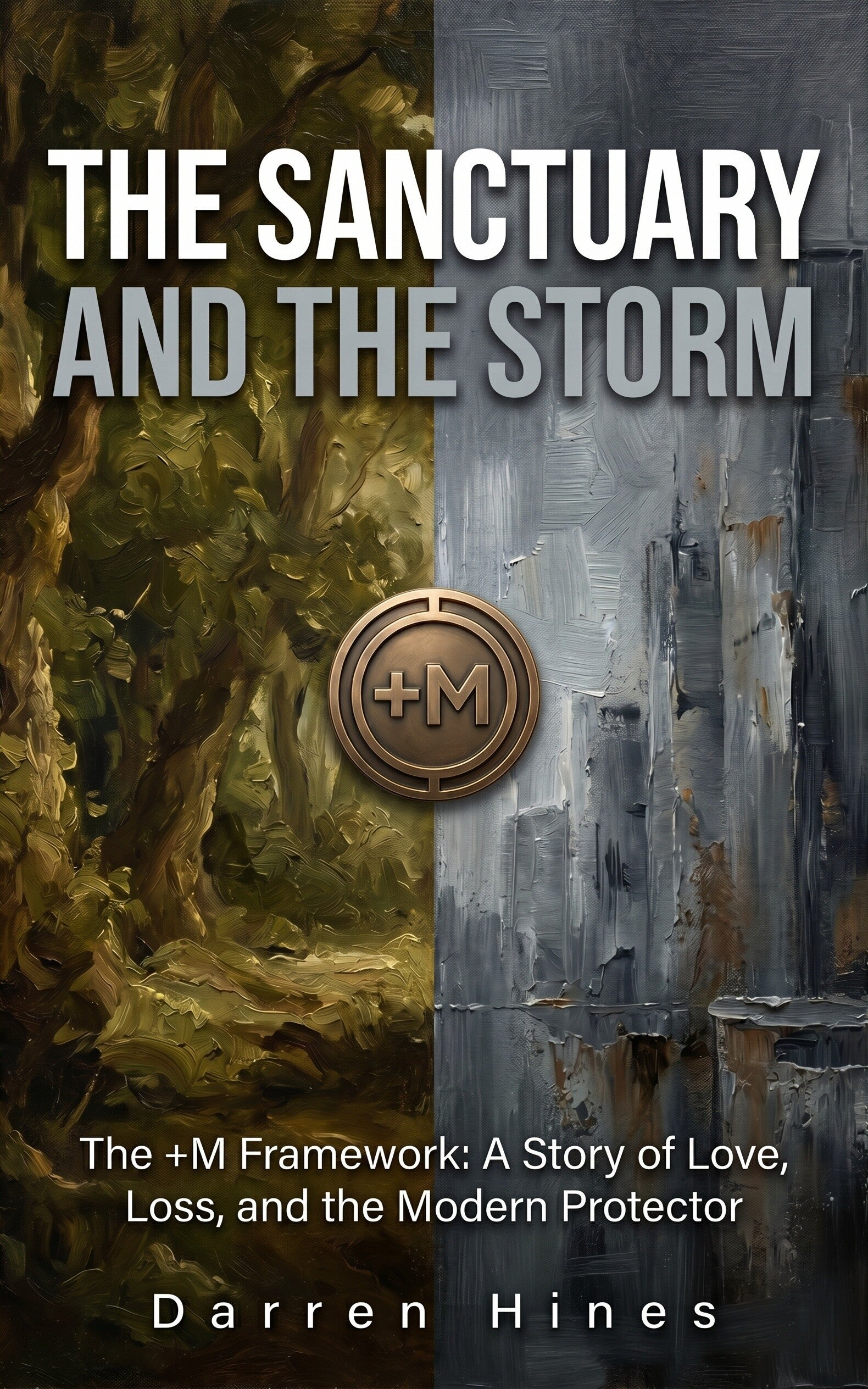
The Sanctuary and the Storm offers another kind of companionship. Darren Hines writes from a story shaped by Princeville, North Carolina, service aboard the USS Nimitz, devastating loss, and a decision to turn grief into service. It does not make hardship sound noble for its own sake. It asks what it takes to become a grounded guardian when life leaves you carrying more than you planned.
For the man who wants more than another burst of motivation
There is no shortage of advice that tells men to work harder, stay tougher, or chase a louder version of success. That advice often leaves out the harder questions. Are the people closest to you getting your attention? Can you name what you feel without letting it run the room? Do your habits support the life you say you want? Are you building friendships with enough truth in them to change you?
These books make room for those questions without treating you as a project to be fixed. They are written for men who want to be more present, more reliable, and more useful. That can mean repairing a relationship, setting a boundary, returning to faith, making space for grief, or finally taking responsibility for a pattern you have been excusing.
The goal is not perfection. It is a life with less performance and more integrity. A man does not become steady through one dramatic decision. He becomes steady through ordinary choices repeated long enough to become part of his character.
Make the reading part of your life
A book can become one more thing you meant to finish, or it can become a tool you use. Keep the approach simple. Read a short section, pause long enough to name what it asks of you, then choose one action that gives the idea a place in the real world. That might be a conversation you have been postponing, a commitment you need to clarify, a friend you need to call, or a routine that deserves a more honest look.
Write one sentence after each reading session: “This matters to me because...” Then finish it without polishing it for anyone else. The point is not to produce a better journal entry. It is to notice where the words land. If a passage makes you defensive, tired, hopeful, or uncomfortable, that reaction is often worth more attention than the easiest quote on the page.
Give the work a small appointment in your week. Twenty quiet minutes on a morning before the household wakes, a few pages after dinner, or a Saturday walk with a notebook can be enough. Consistency gives reflection a chance to move beyond a mood. Over time, the question shifts from “What did I read?” to “What am I becoming more able to do?”
There is no need to carry the work alone. Share a chapter with a trusted friend, a brother, a mentor, or someone who has earned the right to be honest with you. Ask what they see in the idea that you may be missing. A good conversation can turn a private insight into a commitment with enough weight to last.